Asia is central to the global energy future, home to 60% of the world’s population and rapid economic growth. The region must tackle a dual challenge: doubling energy demand by 2030 while cutting emissions. With 85% of its energy still fossil-based and half of global emissions coming from Asia, its choices today will shape tomorrow’s climate. Given its scale and complexity, Asia cannot simply replicate global energy transition models. It must chart a pragmatic, integrated path – one that aligns decarbonisation with economic growth and ensures an equitable, just transition.
Energy Asia: Shaping for Policy, Technology and Finance

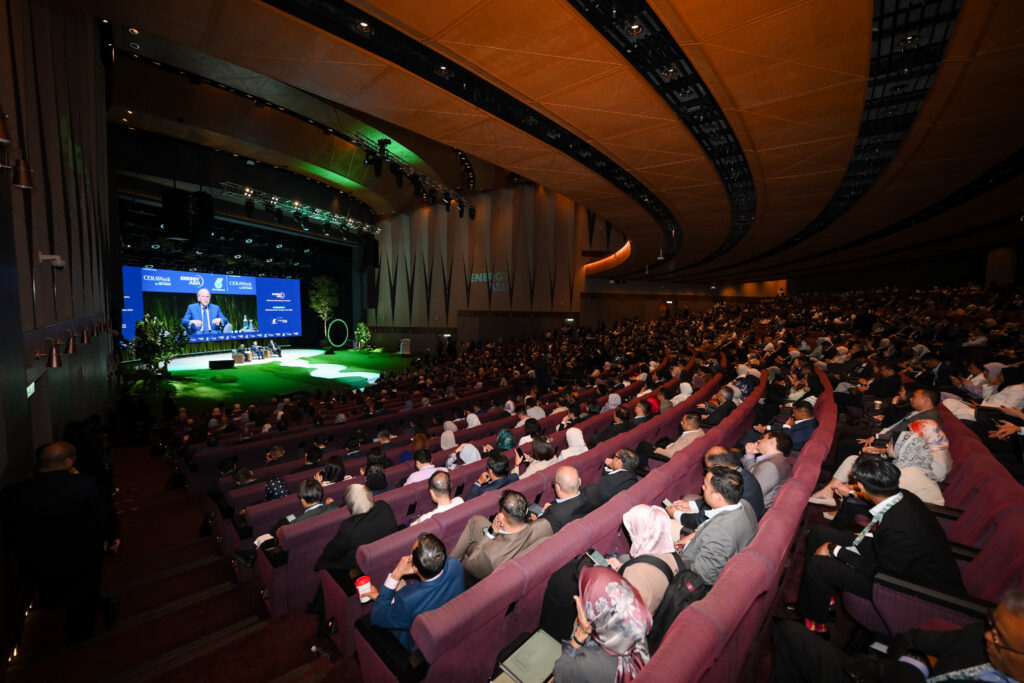
Against this backdrop, Energy Asia 2025, held from 16-18 June in Kuala Lumpur, emerged as far more than just a regional conference. Building on the significant success of the inaugural Energy Asia in 2023, the second edition sought to push the boundaries even further under its overarching theme, ‘Delivering Asia’s Energy Transition.’ Energy Asia positioned itself as the “Voice of Asia” – a platform to align policy and practice for a sustainable low carbon energy future. The conference drew over 4,000 participants from 38 industries and 60 countries, to tackle the region’s energy challenges.
Energy Asia 2025 saw policymakers, businesses and communities come together to align strategies, showcase technologies and mobilise capital for Asia’s transition. The conference drew active involvement and shared commitment from regional stakeholders as well as beyond the region – essential elements towards delivering on ambitious energy and climate goals. The executive conference offered over 50 strategic dialogues, spanning topics from cross-border power grids to carbon capture, renewables deployment, energy security and financing.
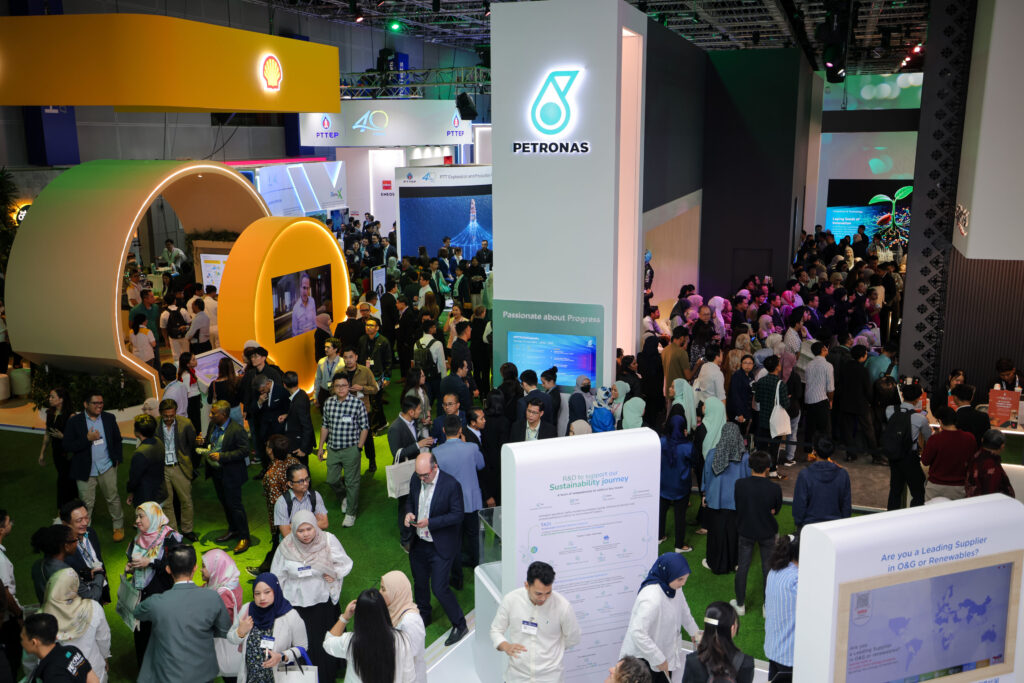
The concurrent Energy Park was the conference’s innovation showcase – attracting nearly 14,000 visitors to demo zones on smart grids, hydrogen, battery storage and digital solutions, which also featured startup pitching sessions, fireside chats and technology demonstrations.
Keynote Insights: Aligning Growth with Green
In his keynote address Malaysia’s Prime Minister, the Honourable Dato’ Seri Anwar Ibrahim noted that Asia Pacific already bears the lion’s share of energy demand and pollution, accounting for “50% of global consumption and 60% of global emissions,” emphasising that the region’s transition must be both ambitious and equitable. He urged the creation of stronger financial frameworks for clean energy, noting that while Southeast Asia’s has vast untapped wind, solar and hydropower potential, it receives only 2% of global clean energy funding.
President & Group CEO of PETRONAS and Chairman of Energy Asia, Tan Sri Tengku Muhammad Taufik, emphasised that “energy security and climate actions are not competing priorities.” He reminded delegates that Asia’s energy demand is set to double by 2050, so “no less than the entire energy ecosystem” must come together for a “just and equitable transition” where no community is left behind.
Experts painted a sober picture of emerging challenges. Dr. Daniel Yergin, S&P Global Vice Chairman and Founder of CERAWeek warned that the transition cannot leave the most vulnerable behind: “But neither can we pretend that the transition will succeed if it leaves billions behind. Asia must grow – responsibly, equitably and urgently.” He highlighted how the boom in data centres, driven by Artificial Intelligence (AI) is suddenly driving huge new demand for electricity and natural gas – and straining supplies of materials like copper. “AI is now a driver of natural gas demand. And the materials needed to support this revolution are not yet aligned with the pace of deployment.” He also noted that geopolitical fragmentation is pulling apart once-globalised energy markets.
The underlying message was clear: Asia’s transition requires resilient systems, inclusive policies and serious financing. As Tan Sri Tengku Muhammad Taufik summed up during a press conference on Day 2 of Energy Asia: “This is no longer about choosing between growth or green. It’s about surviving and succeeding through both.”
Tangible Momentum: Outcomes and Initiatives from Energy Asia 2025
The conference yielded several concrete initiatives and agreements. A significant measure of Energy Asia 2025’s success was the signing of 14 Memoranda of Understanding (MoUs), effectively translating high-level discussions into practical, actionable partnerships.
Notable examples include strategic upstream partnerships (PETRONAS–TotalEnergies collaboration and a joint venture framework with Italy’s Eni to explore new fields) and the award of the Temaris offshore cluster to Seascape Energy Asia. PETRONAS concluded an LNG Sale & Purchase Agreement with Commonwealth LNG to diversify gas supplies. Separately, it signed an MoU with Japan’s JERA to deepen collaboration across the gas value chain for Japanese energy security. These MoUs are direct responses to escalating geopolitical tensions, including conflicts in the Middle East and the spectre of tariffs. They demonstrate a pragmatic approach to securing energy supply while simultaneously pursuing the transition to cleaner energy, ensuring stability amidst global uncertainties.
On the energy transition front, several notable initiatives were launched. PETRONAS unveiled a Blue Carbon Collective in collaboration with the Mercedes-AMG PETRONAS F1 Team, Universidade de São Paulo and Universiti Putra Malaysia to research mangrove-based carbon dioxide (CO2) sequestration. PETRONAS also launched the PETRONAS Energy Transition Academy (P-ETA) to train thousands of workers for the green economy. It also formed Jules Nautica, a joint venture with MISC Berhad and Mitsui OSK Lines, to operate specialised liquefied CO2 carriers – a critical link in scaling up offshore carbon capture and storage. Coupled with big finance pledges (for instance, Tenaga Nasional’s MYR43 billion grid upgrade and PETRONAS’ committed capex), these deliverables show the shift from ideas to implementation.
A key highlight of the conference was the inaugural Energy Asia Global Leadership Executive Forum – a closed-door gathering of over 30 global CEOs and C-suite leaders from the energy, finance, technology and professional services sectors. This high-level dialogue resulted in alignment on four urgent strategic priorities: sharing best practices to build resilient energy systems; enhancing project bankability to unlock capital flows; reducing emissions while delivering social impact; and accelerating innovation and the adoption of decarbonisation technologies.
Looking Ahead: Sustaining Momentum to 2027 and Beyond
Energy Asia 2025 closed on a note of urgency and a powerful call for urgent, inclusive and actionable delivery of the energy transition. The conference reinforced Asia’s unique position at the forefront of global energy transformation, acknowledging the region’s dual imperative to meet surging energy demand while aggressively pursuing decarbonisation.
Maintaining momentum will require sustained collaboration. The next Energy Asia is set to take place on 2–4 June 2027, but its long-term impact hinges on momentum and implementation sustained between now and then. As Tan Sri Tengku Muhammad Taufik remarked in closing: “Asia stands firm in our pragmatic and collaborative approach in shaping a just and equitable energy future.” The challenge now is execution: leveraging this platform to turn conference pledges into concrete actions, and policy dialogue into tangible outcomes for the region.