


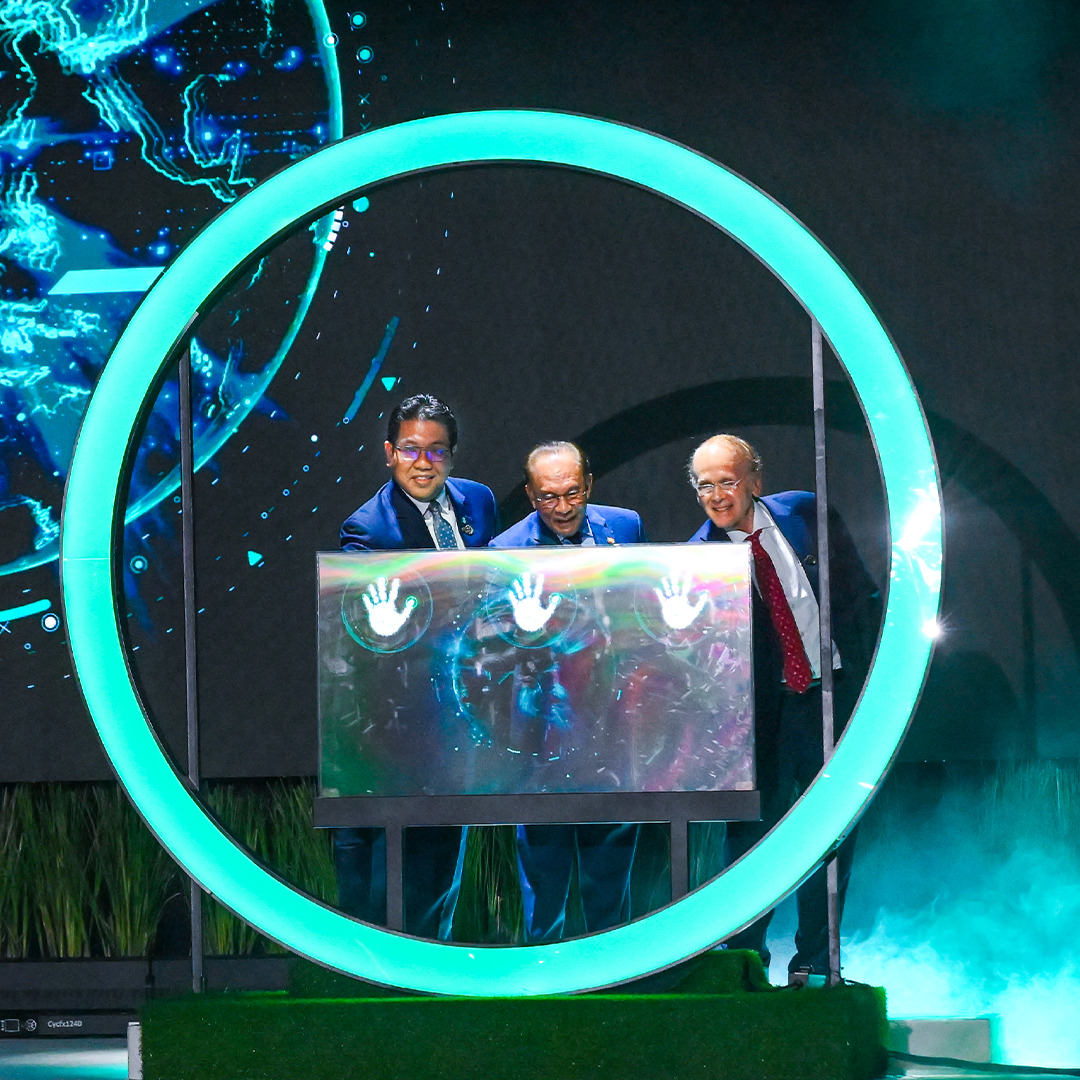
Energy Asia 2025 closed its doors in Kuala Lumpur with a clear message—Asia’s energy transition is not just urgent, it is happening, and the region is ready to lead.
Over the three days from 16 to 18 June, the energy conference drew more than 4,000 attendees from 60 countries and 38 industries, alongside nearly 14,000 visitors to the public-facing Energy Park.
With over 180 speakers and more than 150 sessions,, this year’s edition marked a step change in how the region approaches energy transition—not as a future ambition, but as an immediate priority requiring delivery at scale.
Energy Asia 2025 was officially launched by the Prime Minister of Malaysia, Dato’ Seri Anwar Ibrahim, and hosted by PETRONAS in partnership with CERAWeek by S&P Global. The conference brought together policymakers, industry leaders, investors, and technologists under the theme ‘Delivering Asia’s Energy Transition’.
From the opening keynote to the final sessions, discussions were grounded in the real-world complexity of meeting growing energy demand while advancing the Asian energy ecosystem through decarbonisation, economic development, and social equity.
A Call for Collaboration
Energy Asia 2025 began with a strong call for collaboration that echoed through the three-day conference. The Prime Minister set the tone in his opening address, highlighting how eight out of ten Southeast Asian nations have already committed to net-zero targets through national energy policies—yet clean energy investment in the region remains disproportionately low.
Asia’s opportunities and challenges were highlighted clearly across the three days. In his speech, the Prime Minister highlighted that the region accounts for half of global energy consumption, but attracted just 2% of global clean energy spending in 2023. Addressing this investment gap emerged as a defining theme across the programme.
PETRONAS President and Group CEO, Tan Sri Tengku Muhammad Taufik, described the unique challenges that must be overcome in an era of overlapping economic, geopolitical, and environmental disruptions that demand coordinated and regionally grounded responses. He highlighted that more than 350 million people in Asia still lack reliable access to electricity, and warned against framing sustainability and energy security as opposing forces.
Adequate investment must underpin these efforts. Across the first day’s sessions, speakers stressed the importance of mobilising capital through clearer financial frameworks and blended finance. From public-private partnerships to grid modernisation, Asia’s energy resilience depends on enabling long-term investment—particularly in emerging markets.
A standout moment was the high-level plenary on just transitions, where panellists from across the region agreed that Asia must chart a path that reflects its own diverse economic contexts. From Japan’s AZEC initiatives to China’s hybrid energy systems and Malaysia’s community-focused policies, the region is building its own blueprint—one rooted in pragmatism, not ideology.
Discussing Energy in a Changing World
Energy Asia 2025 highlighted the pivotal crossroads Asia now finds itself at. The second day picked up that momentum, emphasising the evolving role of energy demand driven by artificial intelligence and digital infrastructure.
Discussions also focused on how the region is responding to evolving pressures, with more countries considering carbon pricing schemes. Malaysia is preparing to introduce a carbon tax in 2026, signalling stronger policy alignment across ASEAN.
At the Energy Park, an important conversation unfolded around Indigenous and local communities. The session focused on the vital role Indigenous Peoples play as knowledge holders and stewards of biodiversity. The message was heard clearly that community engagement must go beyond consultation—it must shape the future of energy projects from the start.
Awarding and Rewarding Innovators
Among the many memorable moments of the event, the inaugural Energy Asia Awards stood out as a celebration of action. With over 150 submissions from 20 countries, the awards recognised two projects leading the way in delivering real, scalable impact.
Pos Malaysia took home the Eureka Award for its ‘Greening the Last Mile’ programme, a transformative initiative to cut emissions by half by 2030 through sustainable logistics, data innovation, and community engagement. Pertamina received the Trailblazer Award for its ‘Energy-Independent Village’ project, which brings decentralised clean energy to rural Indonesia while addressing waste, emissions, and economic inclusion. Both winners represent what Energy Asia stands for—innovation with purpose, grounded in local realities and designed for meaningful change.
Innovation, Urgency, and Collaboration Underpinned Energy Asia
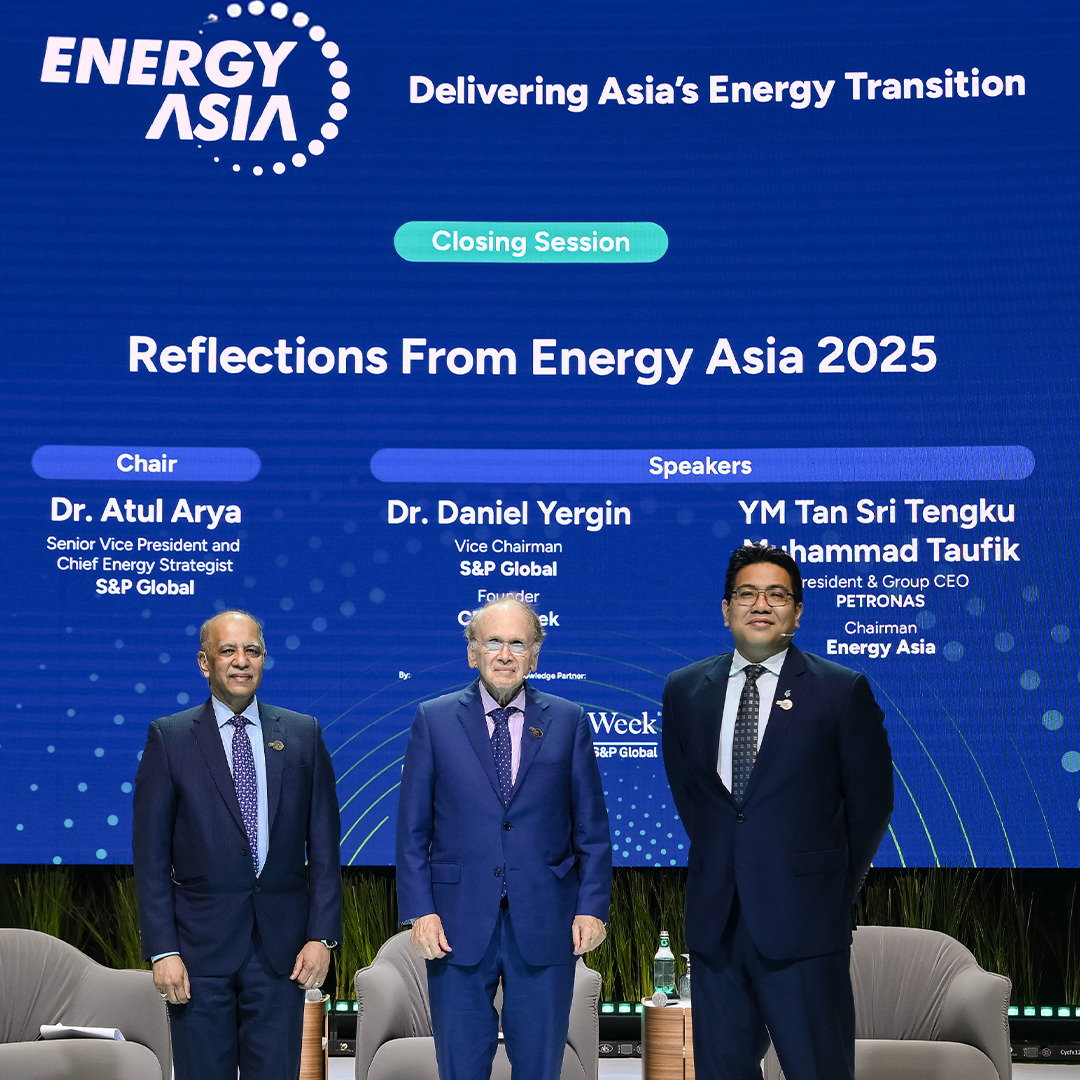
These themes—innovation, urgency, collaboration—carried into the final day of the conference.
The Energy Asia Global Leadership Executive Forum, held behind closed doors, convened more than 30 global CEOs and C-suite leaders from across energy, finance, and professional services. The outcome was alignment around four core areas of focus: (1) building resilient energy systems; (2) unlocking capital; (3) advancing innovation; and (4) cutting emissions while delivering social value.
However, Energy Asia 2025 went beyond conversations to deliver genuine partnerships. The conference marked the signing of 14 memoranda of understanding and several major partnership announcements.
These included a strategic upstream cooperation agreement between PETRONAS and TotalEnergies, a joint venture framework with Eni, and a sale and purchase agreement between PETRONAS LNG Ltd. and Commonwealth LNG to boost supply diversification. PETRONAS also announced the launch of the Energy Transition Academy to build future-ready talent, and introduced the Blue Carbon Collective in partnership with local and international research institutions to advance mangrove-based carbon capture.
The formation of Jules Nautica Sdn Bhd, a joint venture with MISC and Mitsui O.S.K. Lines, also showcased leadership in carbon transport—developing the infrastructure needed to support carbon capture at scale.
These efforts were complemented by parallel partnership pillars, including Future Energy Leaders and the Energy and Nature Forum, showing Energy Asia 2025 went beyond to develop solutions at the nexus of energy and environmental partnership.
Delivering Progress Through Energy Asia 2025
By the end of Energy Asia 2025, the need for progress was tangible. With thousands of delegates exchanging ideas, forming partnerships and committing to action, the event reaffirmed the region’s central role in shaping the global energy transition.
As Tan Sri Tengku Muhammad Taufik said in his closing remarks: “At Energy Asia, we stand firm that this is the age of Asia. There is no net zero without Asia achieving net zero.”
The road ahead will not be easy. But if Energy Asia 2025 showed anything, it is that the region is no longer waiting to be led. It is ready to lead—and it is already delivering.


