Asia sits at the heart of the global energy transition. What the region builds, funds and deploys over the next two decades will define not only its own development trajectory, but the world’s ability to reach net zero.
By 2050, Asia is expected to account for more than half of global energy demand, driven by rapid urbanisation, industrial growth and a rising middle class. Yet despite strong momentum in renewables, fossil fuels still make up more than 80% of the region’s energy mix. For many emerging and developing economies, affordability and energy security remain non-negotiable, meaning the transition must advance without compromising access or reliability.
Global investment signals are encouraging. The International Energy Agency (IEA) forecasts record global energy investment of US$3.3 trillion in 2025, with US$2.2 trillion flowing toward renewables, double the amount directed to fossil fuels. Yet Asia’s challenge is not a lack of capital globally, but how unevenly that capital is distributed across the region.
Southeast Asia illustrates this gap clearly. Despite fast-growing energy demand, the region still attracts only around 2% of global clean energy investment, growing steadily from roughly US$30 billion in 2015 to about US$47 billion by 2025 according to the International Energy Agency (IEA). But this remains far below what is required to support long-term decarbonisation.
Southeast Asia continues to face fragmented regulations, uneven project bankability and higher perceived risk, making it harder to attract capital at scale. In contrast, China attracted more than US$625 billion in clean energy investment in 2024, nearly doubling its 2015 levels, underpinned by strong policy signals, large markets and mature project pipelines.
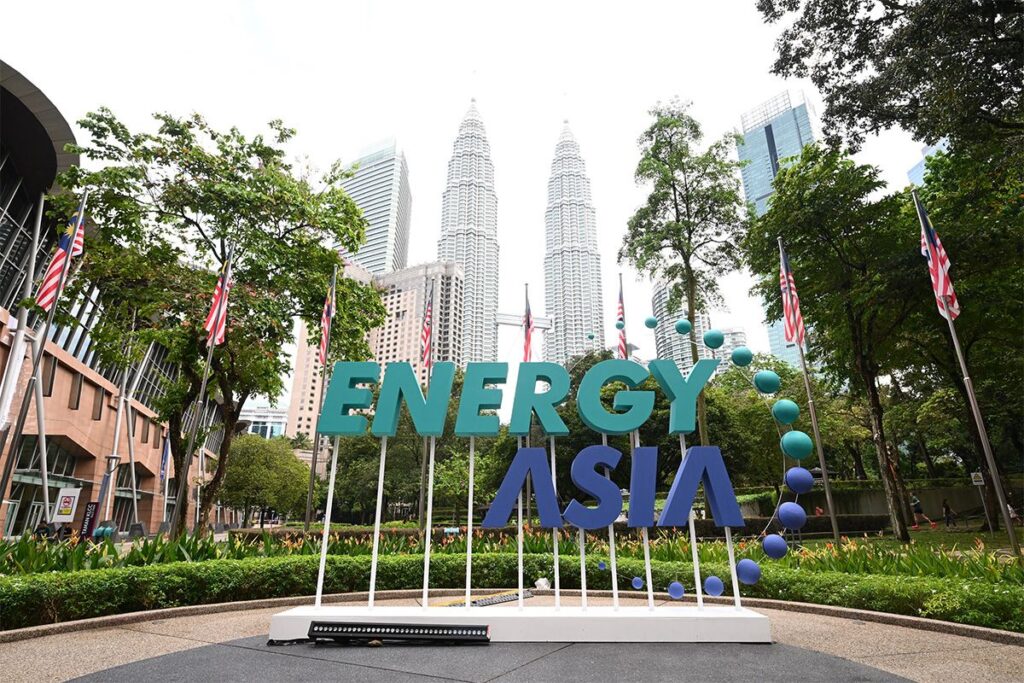
Closing this financing divide was central to discussions at Energy Asia 2025, held in Kuala Lumpur from 16 to 18 June. Policymakers, industry captains and energy professionals agreed ambition alone will not deliver Asia’s energy transition. Capital must be mobilised at scale, channelled to the right markets, and at a pace aligned with regional realities.
Conversations highlighted that no single country or company can address this challenge alone. Accelerating progress will require deeper partnerships between governments, industry, financiers and technology providers alongside financing structures that can de-risk early-stage projects and unlock institutional capital.
There are grounds for optimism. KPMG reports that 72% of Asia-Pacific investors are increasing allocations to energy transition assets. The cost of solar photovoltaic technology has fallen 95% over the past decade, making solar increasingly viable across diverse Asian markets. At the same time, investments in hydrogen, battery storage, smart grids and flexible generation are gathering pace.
Still, progress remains uneven. In Southeast Asia, fossil fuels continue to play a significant role as renewables alone cannot yet meet baseload demand or affordability pressures. As a result, transition pathways will differ. Natural gas, carbon capture and modernised grids remain critical levers for many economies as renewable capacity scales.
Importantly, the case for accelerating investment extends beyond emissions. Clean energy investment strengthens energy security, creates jobs and supports economic resilience. For households and businesses, diversified and modern energy systems translate into greater stability and lower long-term costs.
Policy remains the hinge. Stable regulatory frameworks, predictable pricing mechanisms and targeted incentives are essential to attract long-term capital. Financial tools such as blended finance, concessional funding and green bonds can help reduce risk and unlock investment in emerging markets.
Energy Asia reinforced a fundamental truth – Asia’s energy transition will not follow a single pathway. Each country’s approach will reflect its resource endowment, industrial structure and stage of development. Some will leapfrog directly into renewables while others will move through phased transitions that include destination and transition fuels.
What unites these pathways is the central role of investment alongside technology and collaboration as a decisive enabler. Without sufficient, well-directed capital, even the most carefully designed energy strategies risk stalling.
As Energy Asia reconvenes from 2 to 4 June 2027, the opportunity is clear. By aligning capital with policy, partnerships and innovation, Asia can deliver an energy transition that is cleaner, more resilient and inclusive.
Source from The Edge Malaysia